
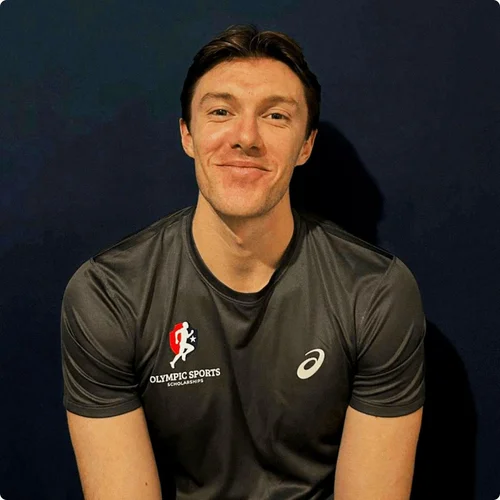
Nathan Gillis, Founder and Director of Olympic Sports Scholarships
Former NCAA Division I athlete at Lamar and La Salle · Great Britain junior international
At a glance
| Born | Scotland; grew up in Oxford |
|---|---|
| Club and coach | Team Kennet, coached by Nick Bull |
| Universities | Lamar University, Texas (NCAA Division I, Southland Conference), then La Salle University, Philadelphia (NCAA Division I, Atlantic 10) |
| Personal bests | 800m 1:48; 1000m 2:21 (both run in the UK) |
| International | Great Britain junior team, 800m; 8th in the European rankings |
| Titles | Individual: Atlantic 10 indoor 1000m champion in 2019 and 2020; Southland Conference 800m silver (outdoors) and bronze (indoors) in 2016. Relays: Atlantic 10 4x800m champion outdoors in 2018 and indoors in 2019. Cross country: part of La Salle's Atlantic 10 title team in 2019 |
| Academic | Psychology degree; Atlantic 10 Academic All-Conference; La Salle Male Scholar-Athlete of the Year; master's in international business management |
How it started
I didn't choose athletics. I broke my ankle playing football, and running was meant to be a way of getting fit again. I joined Team Kennet, where my coach, Nick Bull, told me it was something I could be really good at.
At 16 I ran two minutes for 800m. I was running well at cross country, but nothing that would have made anyone look twice. At 17 I had my breakthrough: 1:52, which put me in the top 20 in the UK.
A Facebook message that took me to Texas
I was recruited by Darren Gauson, a Scottish coach at Lamar University, who messaged me on Facebook. That year I was the only athlete from the top 10 at the UK Inter-Counties who went to the US.
Darren left Lamar before I arrived, so I was coached by his colleague Tony instead. My first year went far better than I could have hoped. I won Southland Conference medals in the 800m, bronze indoors and silver outdoors. Back in the UK that summer, aged 18, I ran 1:48 for 800m, which put me 8th in the European rankings, and earned my Great Britain junior vest.
The mistake I made
I did the whole process on my own, with no support, and I didn't do my homework on universities. I didn't really understand the differences between programmes, and I didn't understand my own value as an athlete.
That is why I ended up transferring. If I'd had someone to help me compare programmes and offers at 17, I could have saved myself a year of finding out the hard way.
Transferring to La Salle
La Salle University in Philadelphia was a much better fit, academically and athletically, and more in keeping with my long-term goals. I had phenomenal training partners there.
The transfer taught me a huge amount: how to manage myself, how to organise my life, how to be independent and how to negotiate a scholarship package. That last skill became the basis of my job, and it has been useful in life generally.
My breakthrough year
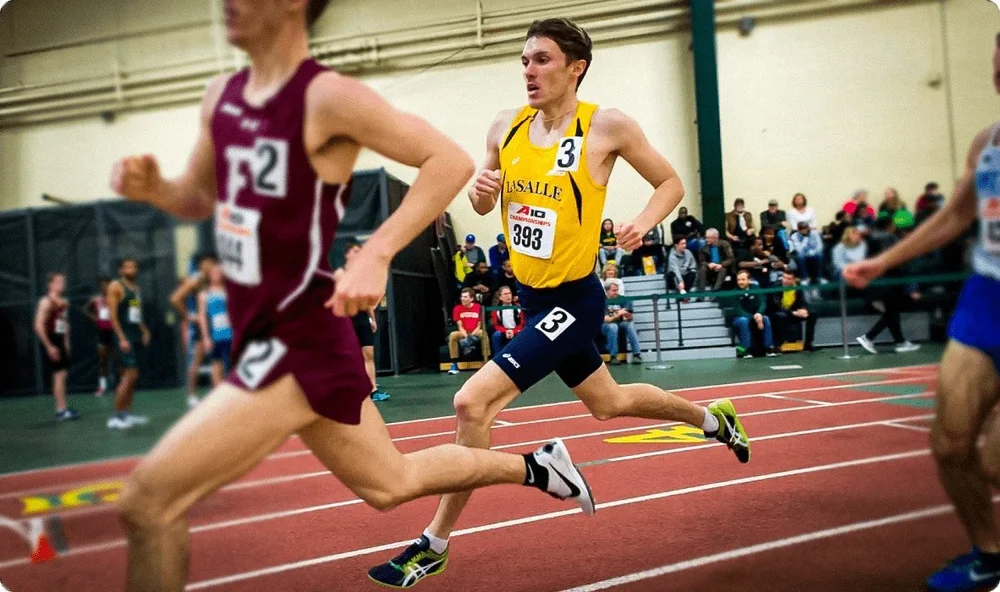
My third year in the US is when things changed. My second coach was fantastic, my racecraft improved massively, and I started to race consistently well indoors.
I kept jumping in at the deep end with really high-quality meets. If you're stubborn and bull-headed enough to keep doing that, the breakthroughs eventually come. I ran 2:21 for 1000m in the UK, which at the time put me in the world's top 20 for the event. I won the Atlantic 10 indoor 1000m title in 2019 and defended it in 2020, and won two Atlantic 10 4x800m relay titles with my teammates.
I also took the classroom seriously. I graduated in psychology, with a focus on sports psychology, and was named to the Atlantic 10 Academic All-Conference team and La Salle's Male Scholar-Athlete of the Year. After graduating I came back to the UK, kept racing in Cardiff and completed a master's in international business management.
Why I started Olympic Sports Scholarships
I started OSS to give young athletes the resources and expertise I didn't have at their age. With the number of athletes I've now worked with, and honestly my obsession with this industry, I wanted an agency that tailors the recruiting process to each athlete and family.
Every family starts with a free assessment, and every offer is compared on what you will actually pay. We've now helped 430+ track and field and cross country athletes from the UK, Ireland, Australia, New Zealand and Europe go to US universities. I'm really proud of what we've achieved.
The athlete I'm proudest of
George Couttie. When George first contacted us, he was thinking about joining the military. He went on to win European Under-20 Cross Country silver and NCAA Indoor silver in the mile, and to run the fifth-fastest indoor 3000m ever by a British athlete, at 20. I have a deeply close connection with George, and helping him on that journey is something I'm remarkably proud of.
What my story means for your family
- Do your homework on programmes. The right coach, training group and course matter more than the name on the vest.
- Know your value. Compare offers on what you will pay after all aid, and don't accept the first one without understanding it.
- Where you are at 16 is not where you finish. I ran 2:00 at 16 and 1:48 at 18. Coaches recruit improvement as well as times.
Read my guides
- A parent's guide to US sports scholarships
- Are US sports scholarships worth it?
- What does a US sports scholarship cover?
- How do sports scholarship agencies work?
- US athletics scholarships for Irish athletes
- Athletics scholarships for women in the USA
Want an honest answer for your child?
Tell us about your child's events, results and grades. We will tell you where they could realistically compete and what kind of scholarship package is likely, with no obligation.
Records: La Salle Explorers athlete profile; TFRRS results (Lamar).