
Is Track & Field Still a Male-Dominated Sport? The Data Says Otherwise
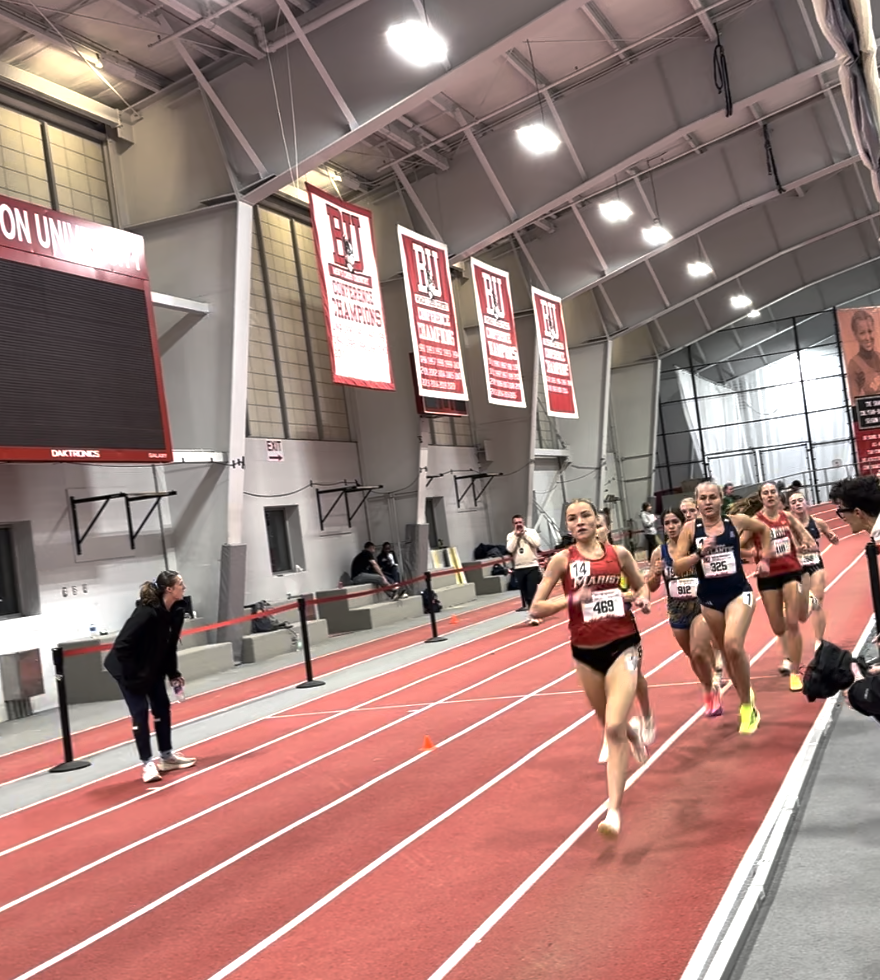
Photo taken in at Boston University Track & Tennis Center.
For decades, track and field – like many sports – has been perceived as male-dominated.
But today, that perception is rapidly becoming outdated.
Across the NCAA and wider sporting landscape, female participation is not only increasing, but it’s also reaching record levels. The reality is that women’s track and field is one of the fastest-growing and most opportunity-rich areas in college sport.
So what does the data actually say?
women’s participation at an all-time high
Recent NCAA data shows that over 242,000 female student-athletes competed in NCAA sports during the 2024–25 academic year, marking a 14% increase over the past decade. (NCAA, 2026)
That growth is consistent across all divisions:
Division I: ~94,935 female athletes
Division II: ~59,999
Division III: ~87,407
Track & field specifically leads the way:
33,500+ athletes in outdoor track
31,800+ in indoor track
This makes track & field one of the largest and most participated women’s sports in the NCAA.
female representation is nearly equal, but not quite
Women now make up roughly 43–44% of NCAA athletes, a huge shift compared to historical figures. (The Collective, 2024)
To put that into perspective:
In the early 1980s, women accounted for around 30% of college athletes
Today, that number is over 40% and rising (Teen Vogue, 2024)
However, there is still a gap:
Women make up ~55% of the general student population, meaning participation still lags behind overall representation The Collective, 2024)
Progress is clear, but full equity has not yet been reached.
Growth is accelerating
The trend isn’t plateauing, it’s accelerating.
Women’s NCAA participation has grown steadily for over 10 consecutive years (Athletic Business, 2025)
Emerging sports programmes are expanding rapidly
Some sports (like wrestling and rugby) are seeing double-digit growth year-on-year (NCAA, 2026)
Even within track & field:
Participation has increased by 16–20% over the past decade
This shows a clear trajectory that women’s sport isn’t catching up, it’s expanding.
opportunities for female athletes are huge
One of the most important takeaways is this:
There are more opportunities for female athletes in the U.S. system than ever before.
Why?
Universities are required to maintain gender balance under Title IX
This often leads to more roster spots and scholarships in women’s sport
Track & field, with its large squads, is one of the biggest beneficiaries
At the same time:
Only around 7.5% of female high school track athletes go on to compete at D1 or D2 level
This all means that there is still huge demand for talented female athletes.
popularity of women’s sports is also rising
It’s not just participation, but interest is also growing.
Recent years have seen:
Record-breaking attendance in women’s professional leagues
Increased media coverage and sponsorship
Historic TV viewership figures in college sport
For example:
The 2024 NCAA women’s basketball final drew 18.9 million viewers, surpassing the men’s final for the first time (Business Insider, 2024)
Just think… for those in the UK watching the Red Roses rugby. Each match this Six Nations tournament has sold out for the England team, showing a clear shift in the way that the world watches female sports!
So, this reflects a wider shift, where women’s sport is no longer niche, it’s completely mainstream.
but there’s still work to do
Despite the progress, challenges remain:
Women’s participation still trails overall student population ratios
Funding and exposure gaps still exist in some areas
Many institutions still fall short of full Title IX balance
A 2021–22 study found:
Women’s athletic participation rates were 14 percentage points lower than their overall enrolment rates (Washington State Standard, 2024)
So while the direction is positive, the journey isn’t complete.
So, is track & field still male-dominated?
Not in the way it once was.
Today, the reality is:
✔ Female participation is at record levels
✔ Opportunities are expanding
✔ Performance standards are rising
✔ Visibility is increasing
Track & field, particularly in the NCAA, is becoming one of the most accessible and opportunity-rich sports for female athletes globally.
where we come in
At Olympic Sports Scholarships, we’re seeing this shift first-hand.
More female athletes are:
Exploring U.S. opportunities
Securing scholarships
Developing at elite levels
Our role is to:
Help athletes understand where they fit
Guide them through the recruitment process
And ensure they maximise the opportunities available
Because for female athletes right now, the U.S. system isn’t just an option; it’s one of the biggest opportunities in sport.
turning potential into possibility
Earning a U.S. sports scholarship can be life-changing, opening doors to world-class education, elite competition, and unforgettable experiences. But it shouldn’t be left to guesswork.
Olympic Sports Scholarships exists to give athletes clarity, confidence, and opportunity, helping them turn hard-earned talent into a future they’re proud of.
If you’re an athlete dreaming of competing and studying in the U.S., Olympic Sports Scholarships could be the team you didn’t know you needed.